The Bible – The Holy Scriptures
The Holy Scriptures
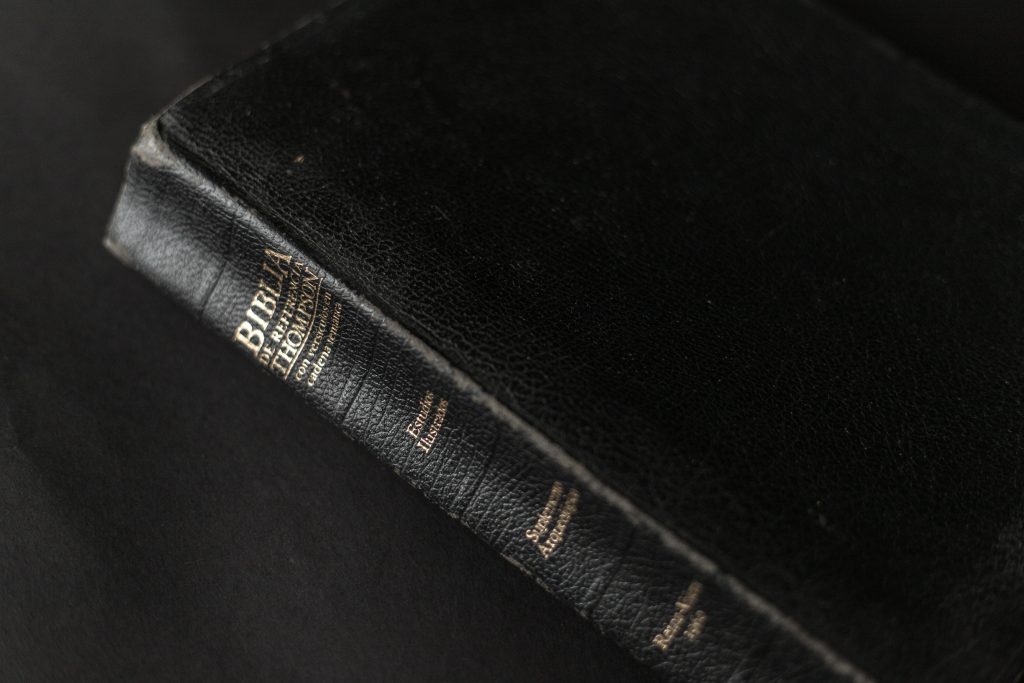
The most used Catholic Bibles in English-speaking regions are the New American Bible Revised Edition (NABRE) (especially in the U.S. for Mass readings) and the Revised Standard Version, Catholic Edition (RSV-CE)/Second Catholic Edition (RSV2CE), favored for study due to its accuracy, with the Jerusalem Bible (JB) / New Jerusalem Bible (NJB) popular in the UK/Commonwealth, and the Douay-Rheims remaining a classic for traditionalists. Popular study editions include the Ignatius Catholic Study Bible (using RSV2CE) and the Great Adventure Catholic Bible (also RSV2CE)
Difference between Catholic and Protestant Bibles
The primary difference between Catholic and Protestant Bibles lies in the canon of Scripture, specifically the Old Testament, resulting in a different total number of books. Catholic Bibles contain 73 books (46 in the Old Testament and 27 in the New Testament), while Protestant Bibles have 66 books (39 in the Old Testament and 27 in the New Testament). The New Testament is identical in both traditions, including the same 27 books from Matthew to Revelation.
Key Differences in the Old Testament
- Catholic Bibles include seven additional books (often called deuterocanonical books) that Protestants do not recognize as canonical: Tobit, Judith, Wisdom (of Solomon), Sirach (Ecclesiasticus), Baruch, and 1 and 2 Maccabees. Catholic versions also incorporate longer forms of Daniel (with additions like the Prayer of Azariah, Susanna, and Bel and the Dragon) and Esther.
- Protestants refer to these texts as the Apocrypha and typically exclude them entirely or place them in a separate section if included at all, viewing them as non-inspired or useful only for historical context but not for doctrine. This stems from the Protestant Reformation in the 16th century, when figures like Martin Luther rejected these books because they were not part of the Hebrew Bible (the Tanakh) and were seen as supporting certain Catholic teachings, such as prayers for the dead (from 2 Maccabees).
Historical and Theological Context
- The Catholic canon was largely established by early Church councils (like Hippo in 393 AD and Carthage in 397 AD) and affirmed at the Council of Trent in 1546, drawing from the Septuagint (a Greek translation of the Hebrew Scriptures used by early Christians, which included the deuterocanonical books).
- Protestants, influenced by the Reformation’s emphasis on sola scriptura (Scripture alone), prioritized the Hebrew canon and rejected books not originally written in Hebrew or deemed non-authoritative. Beyond the canon, broader differences exist in how the Bible is interpreted: Catholics view Scripture alongside Sacred Tradition and the Magisterium (Church teaching authority) as equally authoritative, while Protestants generally hold the Bible as the sole infallible rule of faith.
The Catechism of the Catholic Church (CCC)
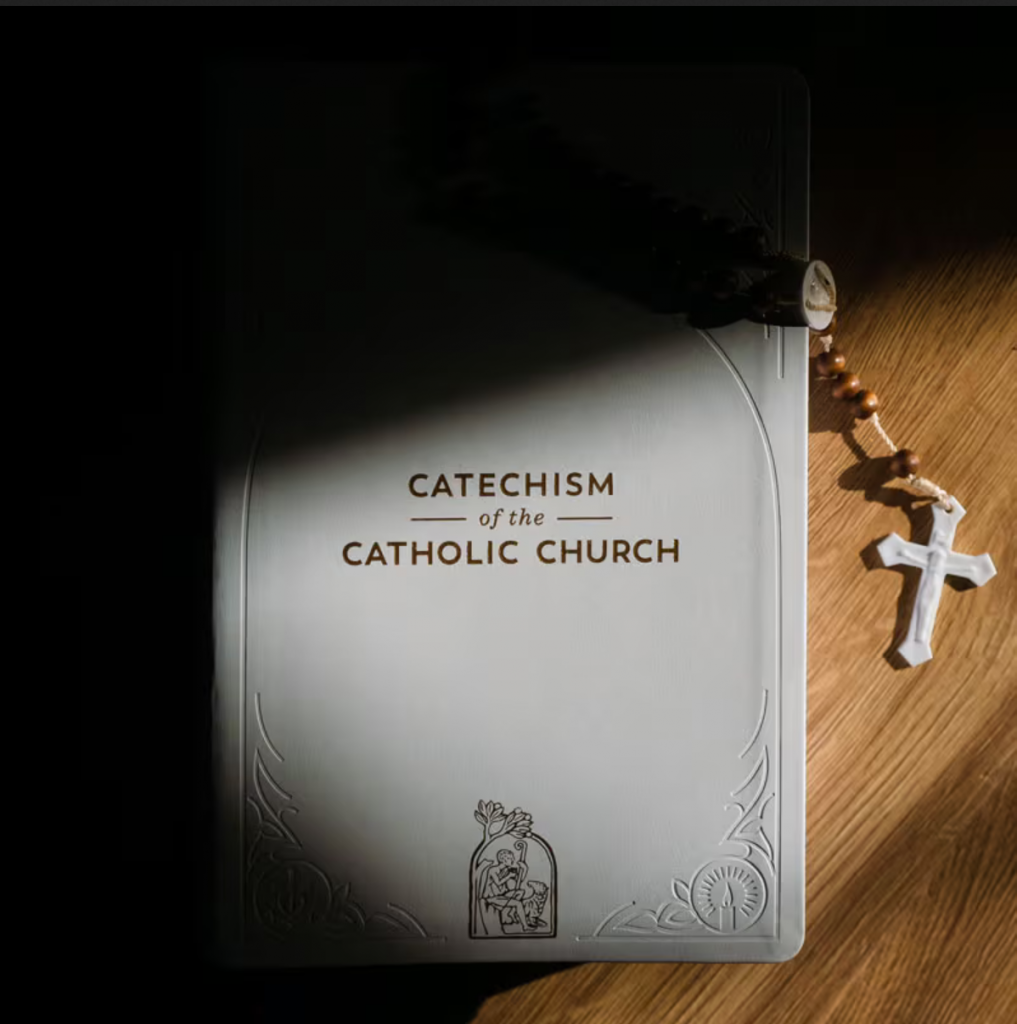
The Catechism of the Catholic Church (often abbreviated as CCC) is the official, comprehensive summary of the Catholic faith, presenting the Church’s doctrines, teachings, and moral guidelines in a structured format. It was first promulgated by Pope John Paul II on October 11, 1992, following the Second Vatican Council (1962–1965), and serves as a reference for bishops, priests, catechists, and laypeople worldwide. The text is divided into four main parts:
- The Profession of Faith: Explains the Creed, covering beliefs in God, Jesus Christ, the Holy Spirit, the Church, and the sacraments.
- The Celebration of the Christian Mystery: Focuses on the liturgy and the seven sacraments (Baptism, Confirmation, Eucharist, Penance, Anointing of the Sick, Holy Orders, and Matrimony).
- Life in Christ: Discusses morality, the Ten Commandments, virtues, sin, and social justice.
- Christian Prayer: Covers forms of prayer, the Lord’s Prayer, and the role of prayer in Catholic life.
It draws from Scripture, Church Fathers, ecumenical councils, and papal teachings, aiming to foster unity and catechesis (religious instruction). Use link below to access the CCC on the Vatican website:
Constitutions of the Church
Lumen Gentium – “Light of the Nations”
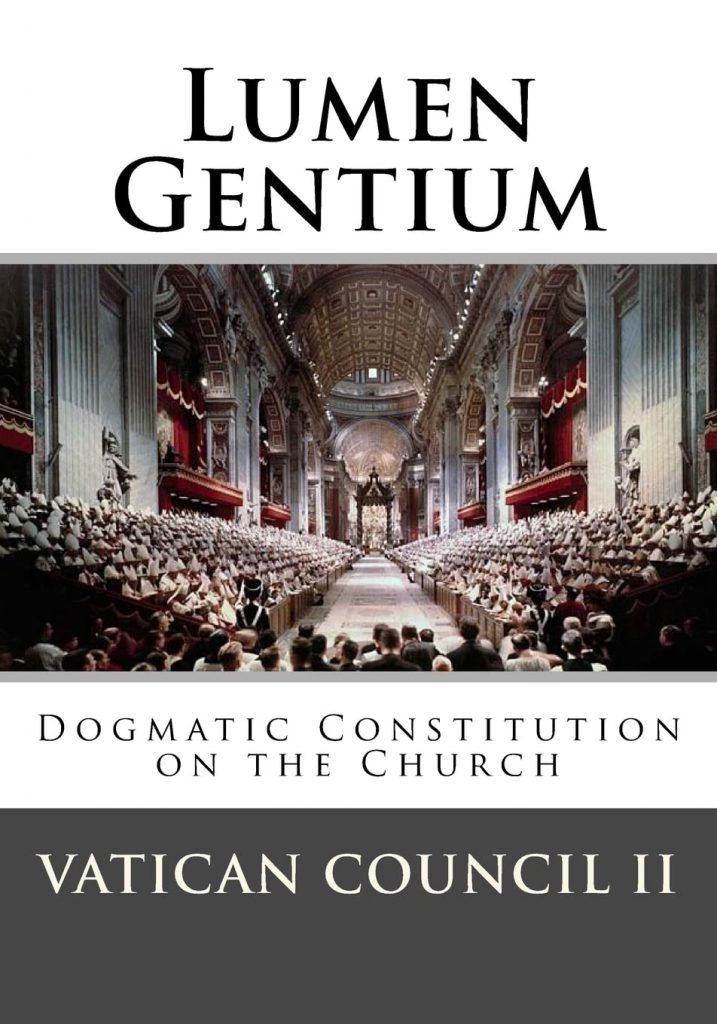
Lumen Gentium, meaning “Light of the Nations,” is a dogmatic constitution on the Church promulgated by Pope Paul VI on November 21, 1964, during the Second Vatican Council (Vatican II). It serves as one of the council’s principal documents, aiming to deepen the understanding of the Church’s inner nature, universal mission, and role as a sacrament of unity between God and humanity, while responding to modern challenges and building on prior ecclesiastical teachings.
Chapter I: The Mystery of the Church
Explores the Church’s divine origin and essence as a mystery rooted in the Trinity. Key points include:
- Christ as the “light of nations” and the Church as a visible sacrament of salvation and unity.
- The Church’s foundation in God’s eternal plan, fulfilled through Christ’s incarnation, death, and resurrection.
- Metaphors for the Church (e.g., sheepfold, vineyard, body of Christ, bride) emphasizing its spiritual and visible dimensions.
- The role of the Holy Spirit in sanctifying, guiding, and unifying the Church.
- Affirmation that the Church “subsists” in the Catholic Church, while recognizing salvific elements outside it.
Chapter II: On the People of God
Describes the Church as a communal “People of God” encompassing all baptized believers. Key points include:
- All humanity called to unity in Christ through a new covenant, transcending divisions.
- Shared dignity and roles: common priesthood of the faithful (spiritual sacrifices, witness) and ministerial priesthood (teaching, governing, sanctifying).
- Sacraments (e.g., Baptism, Eucharist) and virtues structuring the community.
- The prophetic office through faith witness; charisms distributed by the Spirit for renewal.
- Inclusivity toward non-Catholics and non-Christians, emphasizing the Church’s necessity for salvation and missionary outreach.
Chapter III: On the Hierarchical Structure of the Church and in Particular on the Episcopate
Focuses on the Church’s governance and ordained ministries. Key points include:
- Apostolic succession: bishops as successors to the apostles, with the Pope (successor to Peter) ensuring unity.
- Collegiality: bishops exercise supreme authority with the Pope; episcopal consecration confers full priestly powers.
- Roles of bishops (teaching, sanctifying, governing particular churches); priests as collaborators; deacons for service in liturgy, word, and charity.
- Emphasis on hierarchical service to the People of God, promoting missions and inter-church support.
Chapter IV: The Laity
Highlights the vocation of laypeople in the Church’s mission. Key points include:
- Laity share in Christ’s priestly, prophetic, and kingly offices, sanctifying the secular world through daily life.
- Equal dignity among all members; no inequality based on status.
- Apostolate in family, work, and society as “leaven”; cooperation with hierarchy.
- Witness through charity, justice, and ordering temporal affairs to God.
Chapter V: The Universal Call to Holiness in the Church
Affirms that holiness is for all members, regardless of state. Key points include:
- Christ as the model; holiness through charity, sacraments, and virtues (e.g., faith, hope, love).
- Paths to sanctity in various vocations (hierarchy, laity, married life).
- Evangelical counsels (poverty, chastity, obedience) as aids; martyrdom as supreme witness.
- Nourishment by the Spirit’s fruits for personal and communal perfection.
Chapter VI: Religious
Addresses consecrated religious life as a gift to the Church. Key points include:
- Profession of evangelical counsels (chastity, poverty, obedience) for deeper consecration.
- Various forms of religious communities (contemplative, apostolic) contributing to holiness and mission.
- Regulation by Church authority; emphasis on prayer, service, and witness to eschatological hope.
Chapter VII: The Eschatological Nature of the Pilgrim Church and Its Union with the Church in Heaven
Views the Church as a pilgrim journeying toward heavenly fulfillment. Key points include:
- Earthly Church as temporary, oriented to eternal communion.
- Union with the heavenly Church through saints’ intercession and veneration.
- Sacraments and institutions as signs of the passing world; call to vigilance and hope.
Chapter VIII: The Blessed Virgin Mary, Mother of God in the Mystery of Christ and the Church
Integrates Mariology into ecclesiology. Key points include:
- Mary’s role in salvation: Mother of God, perpetual virgin, associate in redemption.
- Exemplar of the Church’s faith, charity, and maternity.
- Veneration (cult) without detracting from Christ’s unique mediation; encouragement of devotion for spiritual growth.
Dei Verbum – “Word of God”
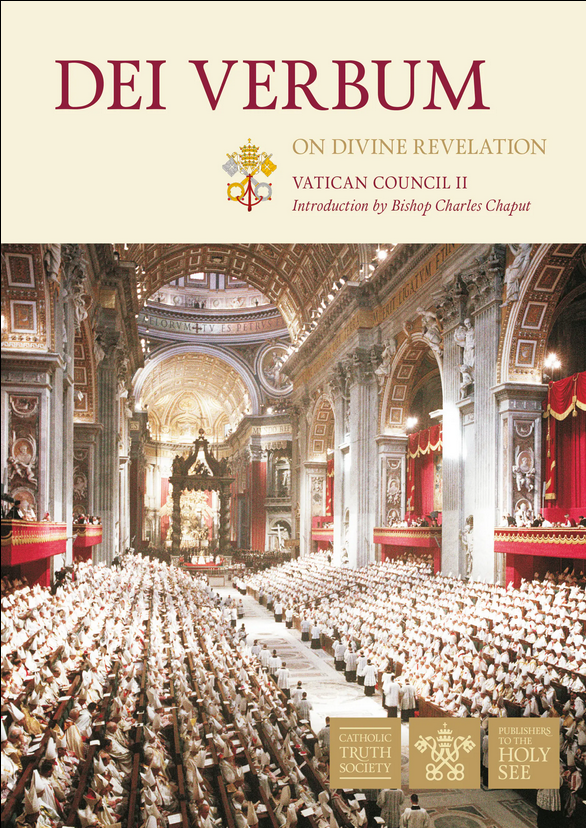
Dei Verbum (Latin for “Word of God”) is the Dogmatic Constitution on Divine Revelation from the Second Vatican Council. It was solemnly promulgated by Pope Paul VI on November 18, 1965. This relatively short but very important document explains how God reveals Himself to humanity, how that revelation is transmitted, and the central role of Sacred Scripture in the Church.
1. Revelation Itself God freely reveals Himself and His plan of salvation out of love. This revelation comes through both deeds and words, reaching its complete and final fulfilment in Jesus Christ, the Word made flesh. After Christ, there is no new public revelation.
2. How Revelation is Transmitted Divine revelation is handed down through two closely connected channels: Sacred Tradition and Sacred Scripture. Together they form a single sacred deposit of the Word of God. The Apostles passed on the Gospel by preaching, example, and writing. Their successors (the bishops) continue this living Tradition. The Magisterium (the Church’s teaching office) authentically interprets both Tradition and Scripture, but it serves them rather than dominating them.
3. Inspiration and Interpretation of Scripture The Bible is truly inspired by the Holy Spirit. God is the main author, but He worked through real human authors who used their own talents and styles. Scripture teaches the truth without error for the sake of our salvation. Correct interpretation requires attention to:
- The intention of the human authors
- Literary forms and historical context
- The unity of the whole Bible
- The living Tradition of the Church
4. The Old Testament These books are permanently valuable. They record God’s covenant with Israel, contain profound teachings and prayers, and prepare the way for Christ. The New Testament is concealed in the Old, and the Old is fully revealed in the New.
5. The New Testament It presents the fullness of revelation. The four Gospels hold a special place as the heart of the New Testament because they faithfully hand on what Jesus did and taught. The other writings (Acts, letters, Revelation) support and explain the Gospel.
6. Scripture in the Life of the Church The Bible must have a central role in the Church. It is the “soul of sacred theology,” nourishes preaching and catechesis, and is to be read and prayed by all the faithful. The Church encourages good translations, Bible study, and daily personal engagement with Scripture.
Overall Message: Dei Verbum beautifully balances the divine and human dimensions of revelation, upholds the equal importance of Tradition and Scripture, and gives a strong, joyful encouragement for every Catholic to encounter God’s living Word in the Bible.
Sacrosanctum Concilium – “On the Sacred Liturgy”
Sacrosanctum Concilium is the Constitution on the Sacred Liturgy promulgated by the Second Vatican Council on December 4, 1963. It aims to renew the Church’s liturgical life by promoting active participation, adapting rites to contemporary needs, fostering Christian unity and strengthening evangelization efforts.
Key Structure and Chapters
The document begins with an introduction outlining the goals of liturgical reform, followed by seven chapters and an appendix on calendar revisions.
- Chapter I: General Principles – Establishes the liturgy as the summit of the Church’s activity and source of its power, emphasizing full, conscious, and active participation by the faithful. It calls for reforms to make rites clearer, simpler, and more scripturally grounded, while respecting tradition and allowing adaptations by competent authorities.
- Chapter II: The Eucharist – Focuses on revising the Mass to enhance understanding and devotion, including expanded Scripture readings, restoration of the Prayer of the Faithful, mandatory homilies, greater use of the vernacular, and provisions for concelebration and Communion under both kinds in certain cases.
- Chapter III: Other Sacraments and Sacramentals – Advocates updating rites for baptism, confirmation, penance, anointing of the sick, ordination, and marriage to promote clarity and participation. It restores the adult catechumenate, allows cultural adaptations in mission areas, and limits reserved blessings.
- Chapter IV: Divine Office – Seeks to restore the Liturgy of the Hours as a sanctification of the day, prioritizing Lauds and Vespers, simplifying structures, extending the psalter cycle, and permitting vernacular use for laity and communal celebrations.
- Chapter V: Liturgical Year – Prioritizes Sundays and feasts of the Lord, restores Lent’s dual baptismal and penitential character, and encourages adaptations to modern pastoral needs while limiting lesser feasts.
- Chapter VI: Sacred Music – Affirms music’s integral role in liturgy, upholding Gregorian chant as principal, but allowing polyphony, popular hymns, and cultural forms. It promotes congregational singing, choirs, and instruments like the organ.
- Chapter VII: Sacred Art and Furnishings – Calls for art and church design that embody noble simplicity and beauty, fostering active participation. It encourages modern styles alongside traditional ones, regulates images and vestments, and stresses formation for artists.
Core Principles and Reforms
The constitution stresses the liturgy’s communal, hierarchical, and scriptural nature, blending immutable divine elements with adaptable human ones. Key reforms include simplifying rites, reducing duplications, increasing Bible use, and integrating local languages and cultures without unauthorized changes. It mandates liturgical education for clergy and laity, establishing commissions to oversee implementation, ultimately aiming to make worship more fruitful for spiritual growth and mission.
Gaudium et Spes – “On the Church in the modern World”
Gaudium et Spes (“Joy and Hope”), officially the Pastoral Constitution on the Church in the Modern World, is one of the four constitutions issued by the Second Vatican Council (Vatican II). Promulgated by Pope Paul VI on December 7, 1965, it is the longest and final document of the Council. It is the first conciliar constitution addressed directly to the entire world (not just Catholics), marking a decisive shift in the Church’s engagement with contemporary society.
The document opens with its famous first line: “The joys and the hopes, the griefs and the anxieties of the men of this age, especially those who are poor or in any way afflicted, these are the joys and hopes, the griefs and anxieties of the followers of Christ.” It presents a dual structure: Part I (doctrinal foundations: nn. 11–45) explores the Church’s teaching on the human person and his vocation; Part II (pastoral applications: nn. 46–93) applies those principles to five urgent modern problems. The whole text is pastoral in style, reading “the signs of the times” in the light of the Gospel while centering everything on the dignity of the human person and Christ as the answer to humanity’s deepest questions.
Preface (nn. 1–3)
The Church declares solidarity with all humanity. Christians share the same hopes, joys, griefs, and anxieties as everyone else because they are fully human and united in Christ. The Council addresses not only believers but “the whole of humanity,” offering the Gospel as light and strength without imposing earthly power. Christ’s example—“to give witness to the truth, to rescue and not to sit in judgment, to serve and not to be served”—sets the tone. The human person is the meeting point between Church and world.
Introduction: The Situation of Men in the Modern World (nn. 4–10)
The Council analyzes profound, rapid changes: scientific and technological progress, urbanization, mass media, population growth, new forms of culture, and social upheaval. These bring both immense possibilities and grave imbalances (wealth alongside poverty, freedom alongside new slaveries). The root imbalance lies inside the human heart—divided by sin—yet humanity thirsts for a fuller life. Only Christ, the “key” to the mystery of man, can untie this knot. The Church must therefore dialogue with the world and scrutinize these “signs of the times” in Gospel light.
Part I: The Church and Man’s Calling (nn. 11–45)
Chapter 1: The Dignity of the Human Person (nn. 12–22)
Human dignity is rooted in creation in God’s image and likeness (Gen 1:26–27). Man possesses intellect, conscience, and freedom; he is social by nature and called to communion with God. Sin wounds this dignity, producing internal division and alienation, but Christ—the perfect man and image of the invisible God—reveals its full meaning. The chapter addresses atheism (various forms from philosophical denial to practical indifference) and insists that only in Christ does man discover who he truly is: “Christ, the final Adam, by the revelation of the mystery of the Father and His love, fully reveals man to man himself and makes his supreme calling clear.” Freedom, conscience, and the hope of resurrection are all illuminated here.
Chapter 2: The Community of Mankind (nn. 23–32)
Humans are created for relationship; the human family forms one community under God. Modern interdependence (accelerated by technology) makes solidarity both possible and urgent. Key principles: respect for the human person, the common good, equality (rejecting every form of discrimination), and the social nature of rights. Love of God and neighbour is the fulfillment of the law. The Church herself is a sign and instrument of this unity, modelling the Trinitarian communion.
Chapter 3: Man’s Activity Throughout the World (nn. 33–39)
Human work and cultural activity continue God’s creative plan (Gen 1:28). Science, technology, and the arts have autonomy but must serve the human person and the common good. Progress is ambiguous—capable of great good or of idolatry—but Christ redeems it. Earthly activity is not futile; it is taken up into the Paschal mystery and oriented toward the Kingdom. “The Lord is the goal of human history, the focal point of the longings of history and of civilization, the centre of the human race…”
Chapter 4: The Role of the Church in the Modern World (nn. 40–45)
The Church is both a sign and instrument of God’s love for the world. She is “a leaven and a kind of soul” in human society, helping to renew it according to Christ’s spirit without identifying with any political system. She defends human dignity, promotes justice, and enriches cultures while remaining independent. Lay Christians especially bear responsibility for transforming the temporal order. The Church herself is constantly enriched by the world’s gifts and must dialogue humbly.
Part II: Some Problems of Special Urgency (nn. 46–93)
Chapter 1: Fostering the Nobility of Marriage and the Family (nn. 47–52)
Marriage is a sacred covenant of mutual self-giving, ordained by God for the good of spouses, children, and society. It is raised to the dignity of a sacrament, mirroring Christ’s love for the Church (Eph 5:25). Conjugal love must be faithful, exclusive, and open to life. The chapter affirms responsible parenthood while rejecting practices contrary to the dignity of the person. The family is the “school of deeper humanity” and the foundation of society; modern threats (polygamy, divorce, selfishness, economic pressures) are addressed prophetically. This section laid groundwork for later teaching such as Humanae Vitae.
Chapter 2: The Proper Development of Culture (nn. 53–62)
Culture encompasses everything that perfects the human person—intellectual, moral, artistic, and social. In the modern world, culture is becoming more universal yet also more autonomous. Christians must promote access to culture for all, respect its legitimate autonomy, and integrate faith with reason. The Church neither identifies with nor rejects any particular culture; she enriches every one while being enriched by them. Education, freedom of inquiry, and theological formation are urgent duties.
Chapter 3: Economic and Social Life (nn. 63–72)
Economic activity exists for man, not vice versa. “Man is the source, the centre, and the purpose of all economic and social life.” The chapter insists on the dignity of labour, just wages, the priority of labour over capital, the universal destination of goods, and the social function of private property. It condemns excessive inequality, exploitation, and unchecked profit-seeking, calling for reforms that serve the whole person and the common good. Development must be participatory and oriented toward justice.
Chapter 4: The Life of the Political Community (nn. 73–76)
Political authority comes from God and exists for the common good. The Church endorses no single form of government but insists every regime must respect human dignity, freedom, and participation. Citizens have rights and duties; Christians are called to active, responsible engagement in public life while maintaining the distinction between Church and state.
Chapter 5: The Fostering of Peace and the Promotion of a Community of Nations (nn. 77–93)
Peace is not merely the absence of war but the fruit of justice, love, and order. The arms race and the threat of nuclear annihilation are condemned as “one of the greatest curses on the human race.” Total war and indiscriminate destruction of cities are crimes against God and humanity. The chapter calls for international cooperation, disarmament, a strengthened world authority with real power, and the building of a true community of nations. It endorses the possibility of a just war under strict conditions but emphasizes that peace must be actively constructed through justice, solidarity, and love. Christians are urged to work for these goals as a witness to Christ.
Conclusion (nn. 91–93)
The Council ends as it began: with an urgent appeal to all people of good will. The Church offers herself in sincere dialogue and service, acknowledging that this document is only a beginning. Christians are called to collaborate with everyone to build a more humane world, always oriented toward the Kingdom of God.
Important Encyclicals
Accordion Heading
Accordion Content
Accordion Heading
Accordion Content
Accordion Heading
Accordion Content
Accordion Heading
Accordion Content