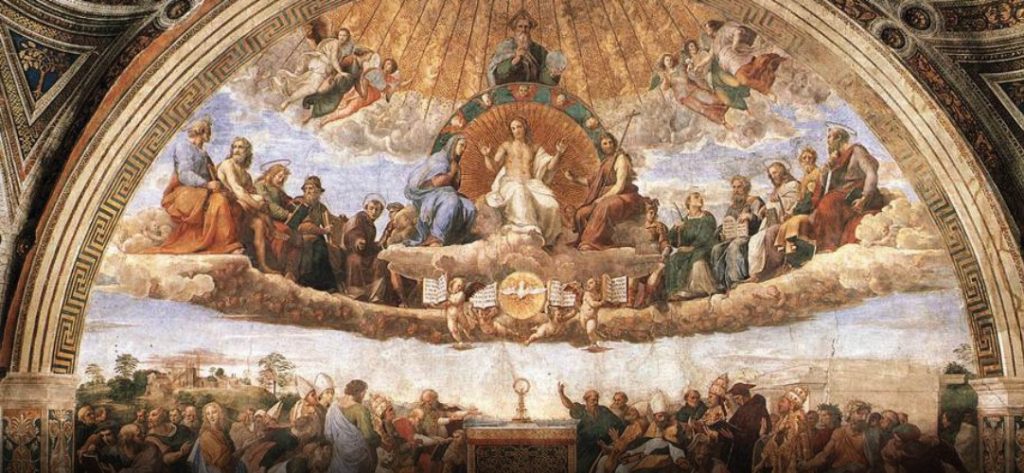
The eternal Father, by a free and hidden plan of His own wisdom and goodness, created the whole world. His plan was to raise men to a participation of the divine life. Fallen in Adam, God the Father did not leave men to themselves, but ceaselessly offered helps to salvation, in view of Christ, the Redeemer “who is the image of the invisible God, the firstborn of every creature”. All the elect, before time began, the Father “foreknew and pre- destined to become conformed to the image of His Son, that he should be the firstborn among many brethren”. He planned to assemble in the holy Church all those who would believe in Christ. Already from the beginning of the world the foreshadowing of the Church took place. It was prepared in a remarkable way throughout the history of the people of Israel and by means of the Old Covenant. In the present era of time the Church was constituted and, by the outpouring of the Spirit, was made manifest. At the end of time it will gloriously achieve completion, when, as is read in the Fathers, all the just, from Adam and “from Abel, the just one, to the last of the elect, will be gathered together with the Father in the universal Church.
The Son, therefore, came, sent by the Father. It was in Him, before the foundation of the world, that the Father chose us and predestined us to become adopted sons, for in Him it pleased the Father to re-establish all things. To carry out the will of the Father, Christ inaugurated the Kingdom of heaven on earth and revealed to us the mystery of that kingdom. By His obedience He brought about redemption. The Church, or, in other words, the kingdom of Christ now present in mystery, grows visibly through the power of God in the world. This inauguration and this growth are both symbolized by the blood and water which flowed from the open side of a crucified Jesus, and are foretold in the words of the Lord referring to His death on the Cross: “And I, if I be lifted up from the earth, will draw all things to myself”. As often as the sacrifice of the cross in which Christ our Passover was sacrificed, is celebrated on the altar, the work of our redemption is carried on, and, in the sacrament of the eucharistic bread, the unity of all believers who form one body in Christ is both expressed and brought about. All men are called to this union with Christ, who is the light of the world, from whom we go forth, through whom we live, and toward whom our whole life strains. (Lumen Gentium, 1964)

The Church
This Sacred Council, following closely in the footsteps of the First Vatican Council, with that Council teaches and declares that Jesus Christ, the eternal Shepherd, established His holy Church, having sent forth the apostles as He Himself had been sent by the Father; and He willed that their successors, namely the bishops, should be shepherds in His Church even to the consummation of the world. And in order that the episcopate itself might be one and undivided, He placed Blessed Peter over the other apostles, and instituted in him a permanent and visible source and foundation of unity of faith and communion. And all this teaching about the institution, the perpetuity, the meaning and reason for the sacred primacy of the Roman Pontiff and of his infallible magisterium, this Sacred Council again proposes to be firmly believed by all the faithful. Continuing in that same undertaking, this Council is resolved to declare and proclaim before all men the doctrine concerning bishops, the successors of the apostles, who together with the successor of Peter, the Vicar of Christ, the visible Head of the whole Church, govern the house of the living God.
The Lord Jesus, after praying to the Father, calling to Himself those whom He desired, appointed twelve to be with Him, and whom He would send to preach the Kingdom of God; and these apostles He formed after the manner of a college or a stable group, over which He placed Peter chosen from among them. He sent them first to the children of Israel and then to all nations, so that as sharers in His power they might make all peoples His disciples, and sanctify and govern them, and thus spread His Church, and by ministering to it under the guidance of the Lord, direct it all days even to the consummation of the world. And in this mission they were fully confirmed on the day of Pentecost in accordance with the Lord’s promise: “You shall receive power when the Holy Spirit comes upon you, and you shall be witnesses for me in Jerusalem, and in all Judea and in Samaria, and even to the very ends of the earth”. And the apostles, by preaching the Gospel everywhere, and it being accepted by their hearers under the influence of the Holy Spirit, gather together the universal Church, which the Lord established on the apostles and built upon blessed Peter, their chief, Christ Jesus Himself being the supreme cornerstone.
(Lumen Gentium Ch.3 18-19)
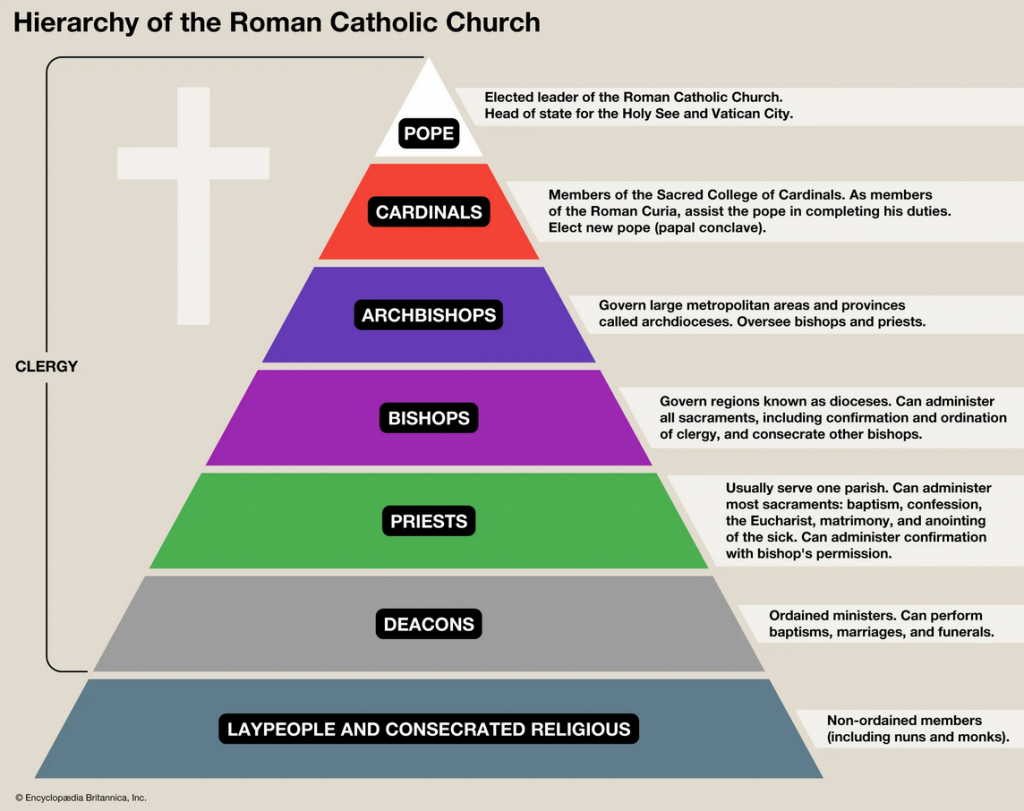
That divine mission, entrusted by Christ to the apostles, will last until the end of the world,since the Gospel they are to teach is for all time the source of all life for the Church. And for this reason the apostles, appointed as rulers in this society, took care to appoint successors.
For they not only had helpers in their ministry, but also, in order that the mission assigned to them might continue after their death, they passed on to their immediate cooperators, as it were, in the form of a testament, the duty of confirming and finishing the work begun by themselves, recommending to them that they attend to the whole flock in which the Holy Spirit placed them to shepherd the Church of God. They therefore appointed such men, and gave them the order that, when they should have died, other approved men would take up their ministry. Among those various ministries which, according to tradition, were exercised in the Church from the earliest times, the chief place belongs to the office of those who, appointed to the episcopate, by a succession running from the beginning, are passers-on of the apostolic seed. Thus, as St. Irenaeus testifies, through those who were appointed bishops by the apostles, and through their successors down in our own time, the apostolic tradition is manifested and preserved.
Bishops, therefore, with their helpers, the priests and deacons, have taken up the service of the community, presiding in place of God over the flock, whose shepherds they are, as teachers for doctrine, priests for sacred worship, and ministers for governing. And just as the office granted individually to Peter, the first among the apostles, is permanent and is to be transmitted to his successors, so also the apostles’ office of nurturing the Church is permanent, and is to be exercised without interruption by the sacred order of bishops. Therefore, the Sacred Council teaches that bishops by divine institution have succeeded to the place of the apostles, as shepherds of the Church, and he who hears them, hears Christ, and he who rejects them, rejects Christ and Him who sent Christ.
(Lumen Gentium, CH. 20)
The Papacy

”But the college or body of bishops has no authority unless it is understood together with the Roman Pontiff, the successor of Peter as its head. The pope’s power of primacy over all, both pastors and faithful, remains whole and intact. In virtue of his office, that is as Vicar of Christ and pastor of the whole Church, the Roman Pontiff has full, supreme and universal power over the Church. And he is always free to exercise this power. The order of bishops, which succeeds to the college of apostles and gives this apostolic body continued existence, is also the subject of supreme and full power over the universal Church, provided we understand this body together with its head the Roman Pontiff and never without this head. This power can be exercised only with the consent of the Roman Pontiff. For our Lord placed Simon alone as the rock and the bearer of the keys of the Church and made him shepherd of the whole flock; it is evident, however, that the power of binding and loosing, which was given to Peter was granted also to the college of apostles, joined with their head.”
Lumen Gentium. Ch 22
“And I tell you, you are Peter and on this rock I will build my church, and the gates of Hades will not prevail against it. I will give you the keys of the kingdom of heaven, and whatever you bind on earth will be bound in heaven, and whatever you loose on earth will be loosed in heaven.” (Matthew 16:18-19)
“When they had finished breakfast, Jesus said to Simon Peter, “Simon son of John, do you love me more than these?” He said to him, “Yes, Lord; you know that I love you.” Jesus said to him, “Feed my lambs.” A second time he said to him, “Simon son of John, do you love me?” He said to him, “Yes, Lord; you know that I love you.” Jesus said to him, “Tend my sheep.” He said to him the third time, “Simon son of John, do you love me?” Peter felt hurt because he said to him the third time, “Do you love me?” And he said to him, “Lord, you know everything; you know that I love you.” Jesus said to him, “Feed my sheep.” (John 21:15-17)
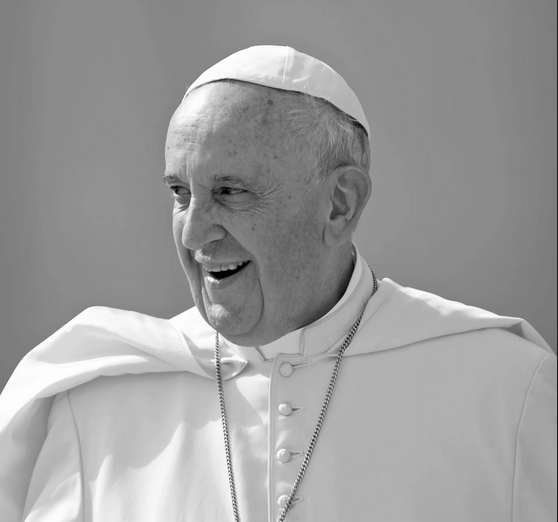
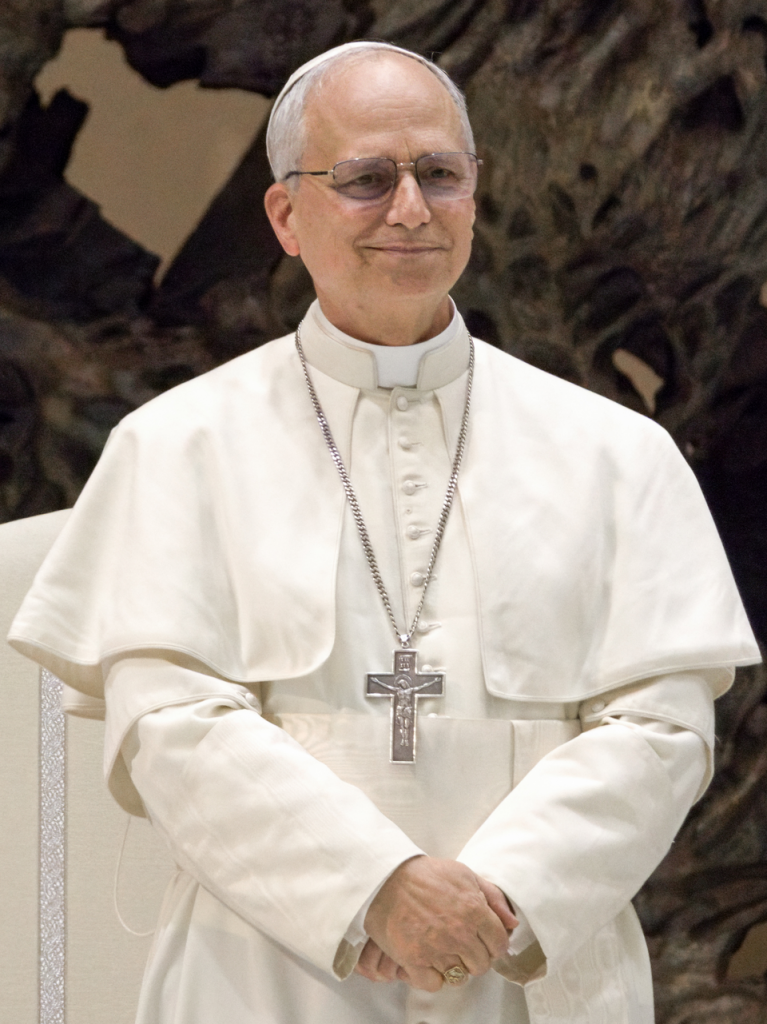
- There have been 267 popes in the history of the Catholic Church, from St Peter (considered the first) to the current Pope Leo XIV.
- Interesting video explaining every pope from St Peter to Pope Francis https://www.youtube.com/watch?v=wtME4bQczdo
- This is another useful website outlining all popes https://www.papalencyclicals.net/popelist
- Further good source is the book ‘A History of the Popes – From Peter to the Present’ by John W. O’Malley
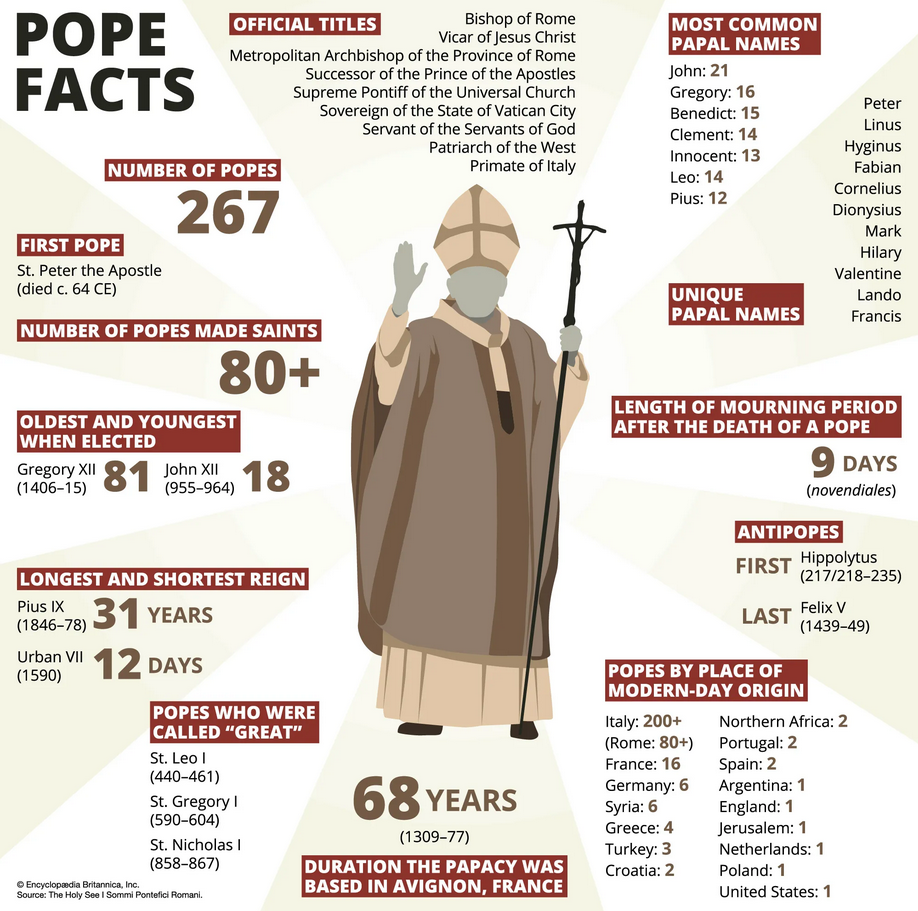
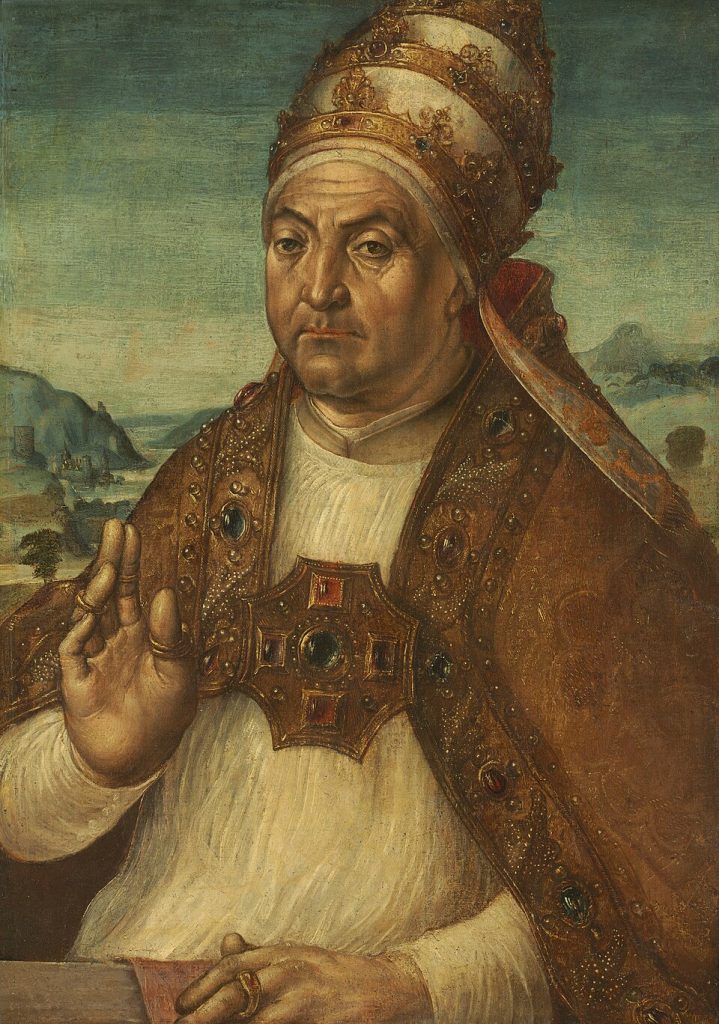
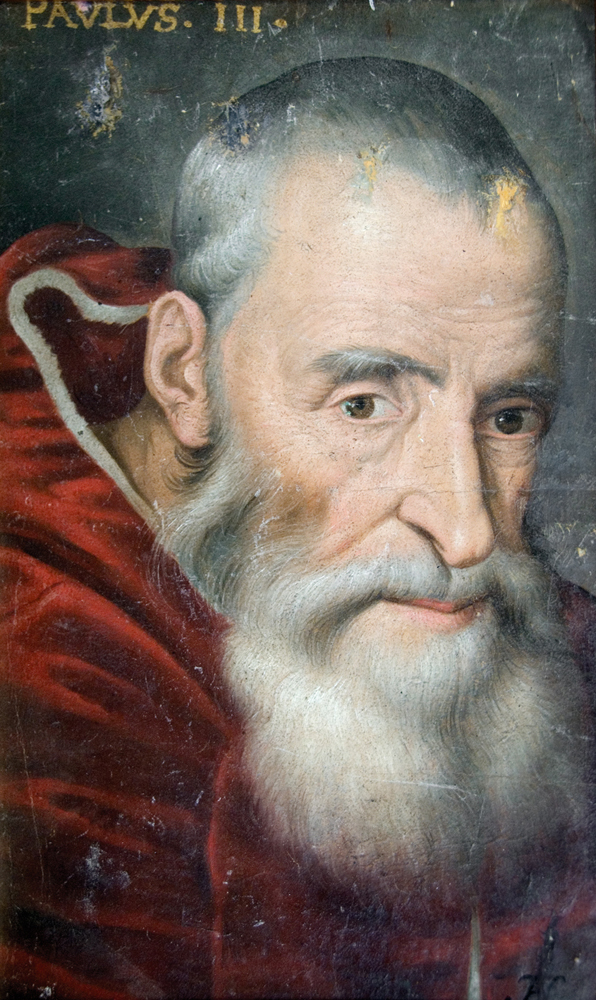
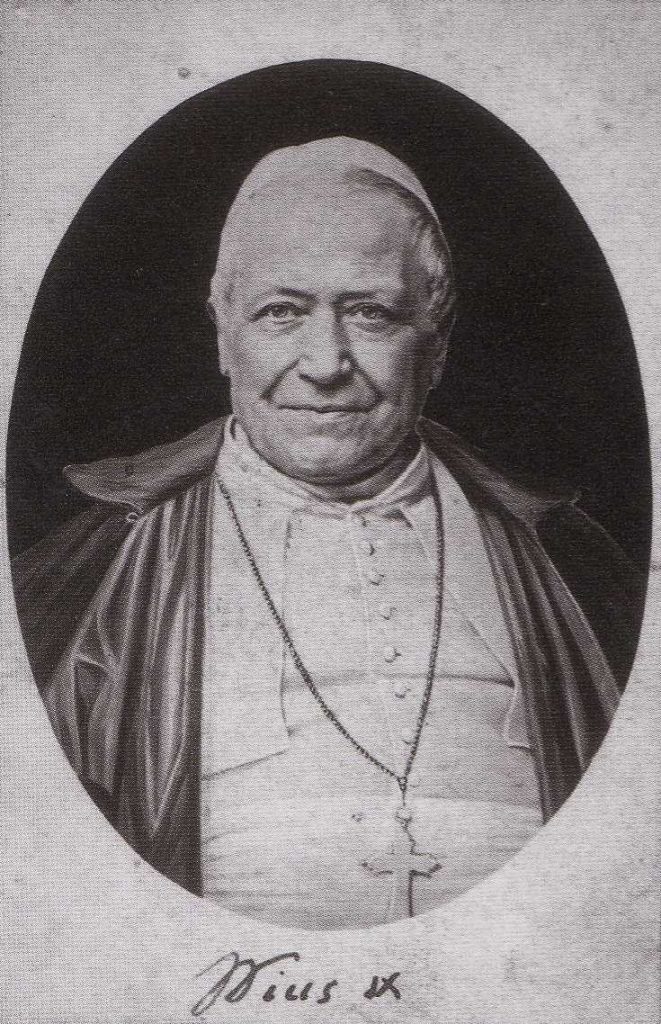
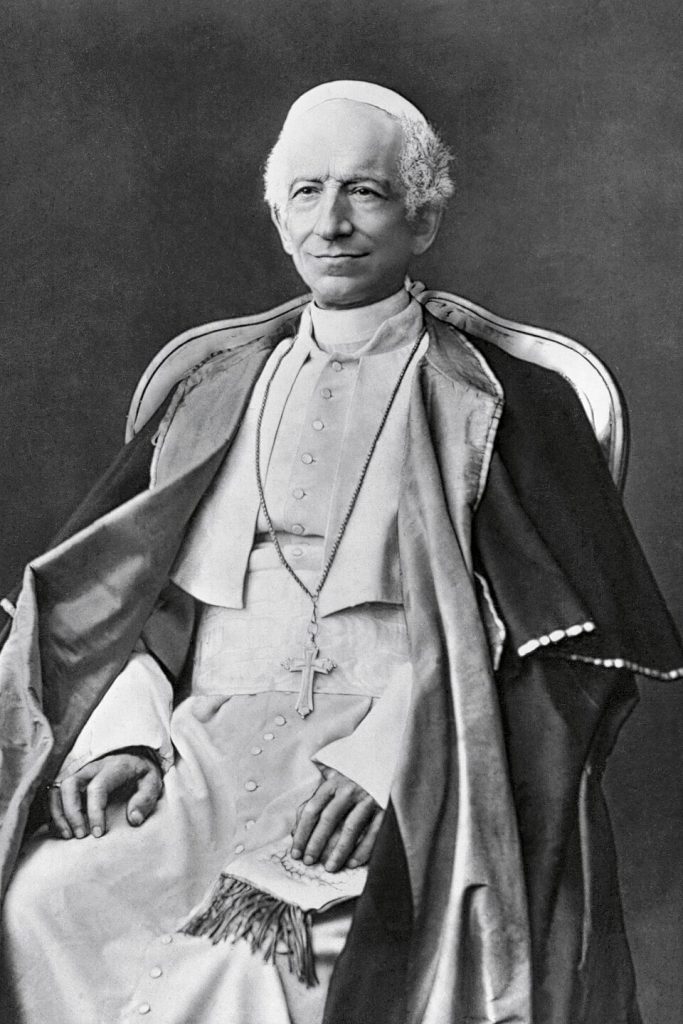
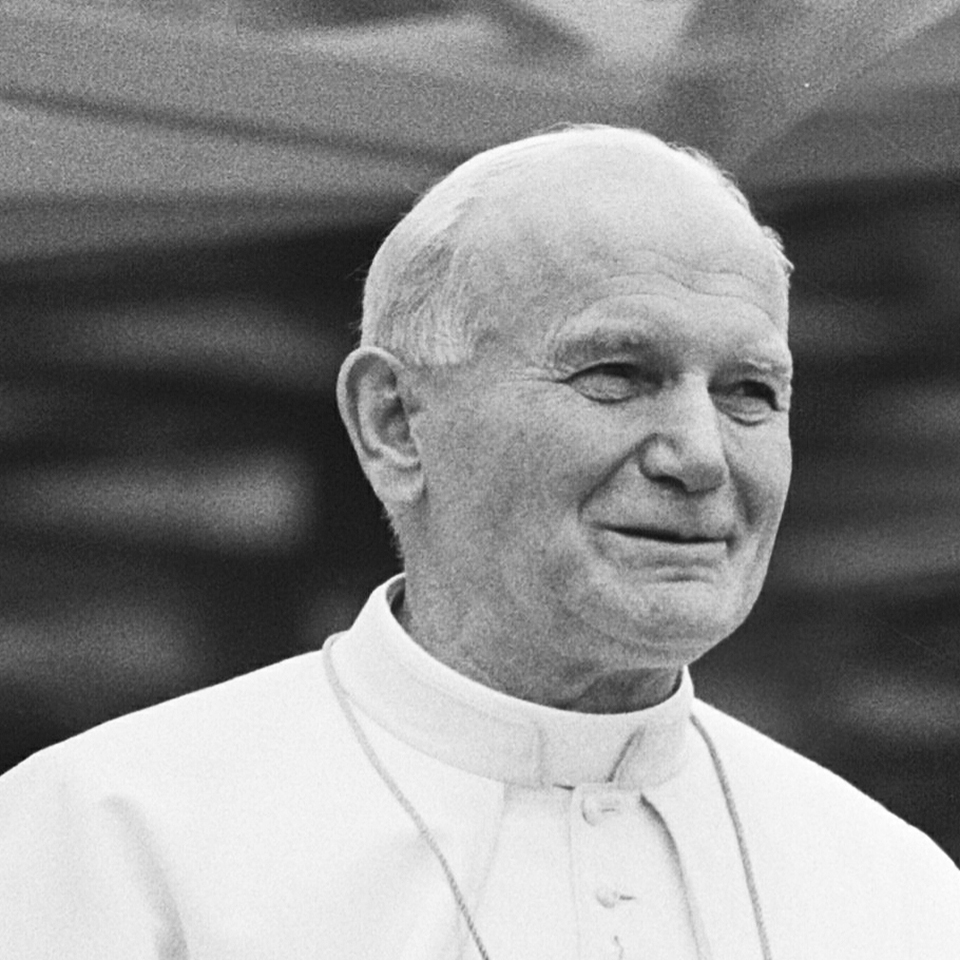
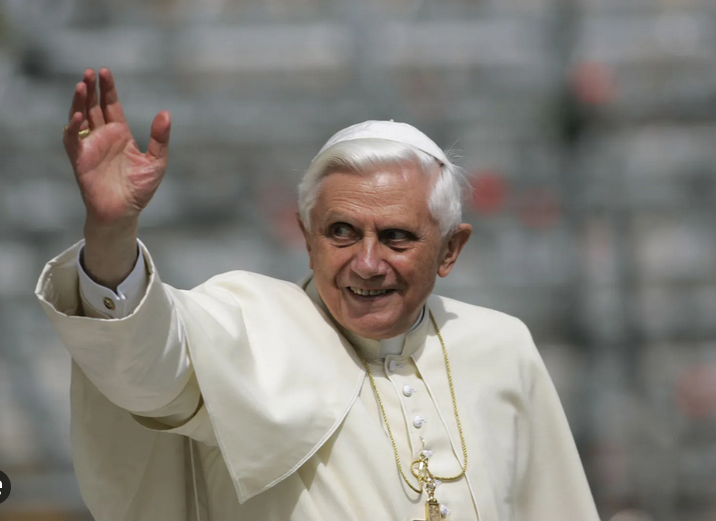
Examples of significant and current Popes



Church Councils
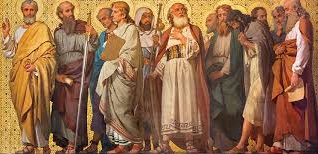
To be deep into history, John Henry Newman wrote, is to cease to be a Protestant. Put another way, to be deep into history is to become stronger in the Catholic faith.
To make that journey into the history of our faith is to discover anew its most basic tenets. Who was Jesus really? How can God be three persons in one being? What is the proper role of the Church in salvation? And how does Mary fit into all this?
These questions, and many more, were raised and answered in the ecumenical, or universal, Church councils.
Ironically, one key to understanding the orthodox teachings of these councils is heresy. The councils, especially the earliest ones, were essentially anti-heresy conventions, called to sort the wheat of dogma from the chaff of heresy. This could be a dizzying and disorderly process: no sooner had one bastion of orthodoxy had been defended, than the Church had to rush to the defense of another. So, while one council had to correct heretics who falsely divided Christ into two persons, the next council had to make a course correction in the other direction, reining in heretics who falsely united His human and divine natures into one.
“To have fallen into any one of the fads from Gnosticism to Christian Science would indeed have been obvious and tame,” G. K. Chesterton wrote in Orthodoxy. “But to have avoided them all has been one whirling adventure; and in my vision the heavenly chariot flies thundering through the ages, the dull heresies sprawling and prostrate, the wild truth reeling but erect.”
In all, there were 21 ecumenical councils. All were important in their time, but only some of them stand out for the lasting significance they have had on the faith and life of the Church today.
More in-depth information can be found here: https://www.papalencyclicals.net/councils
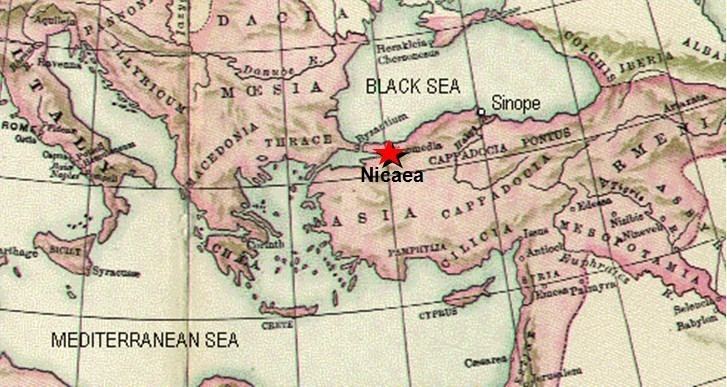
The First Council of Nicaea, AD 325
First Council of Constantinople, AD 381
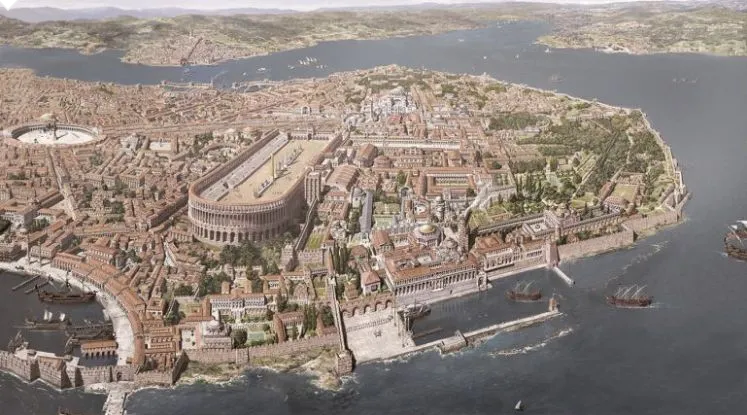
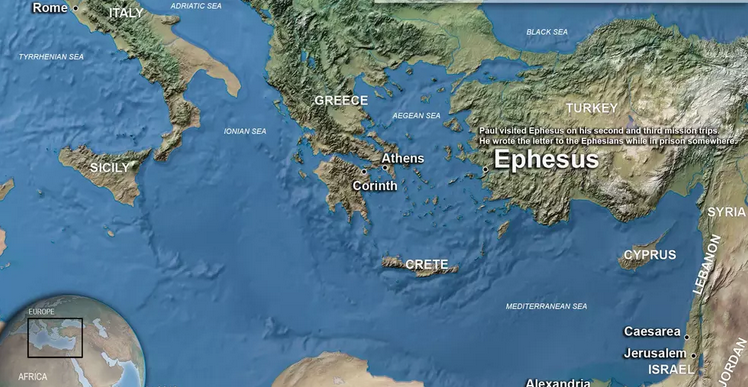
Council of Ephesus, AD431
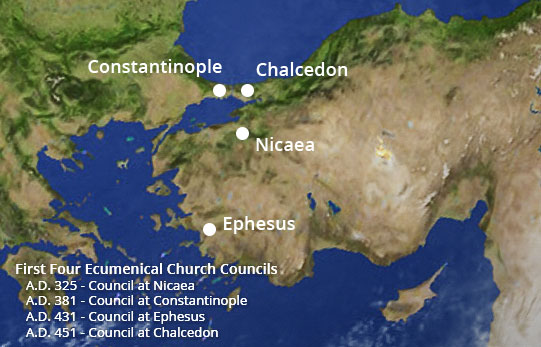
Council of Chalcedon, AD 451
Third Council of Constantinople, AD 680

Second Council of Nicaea, AD 787
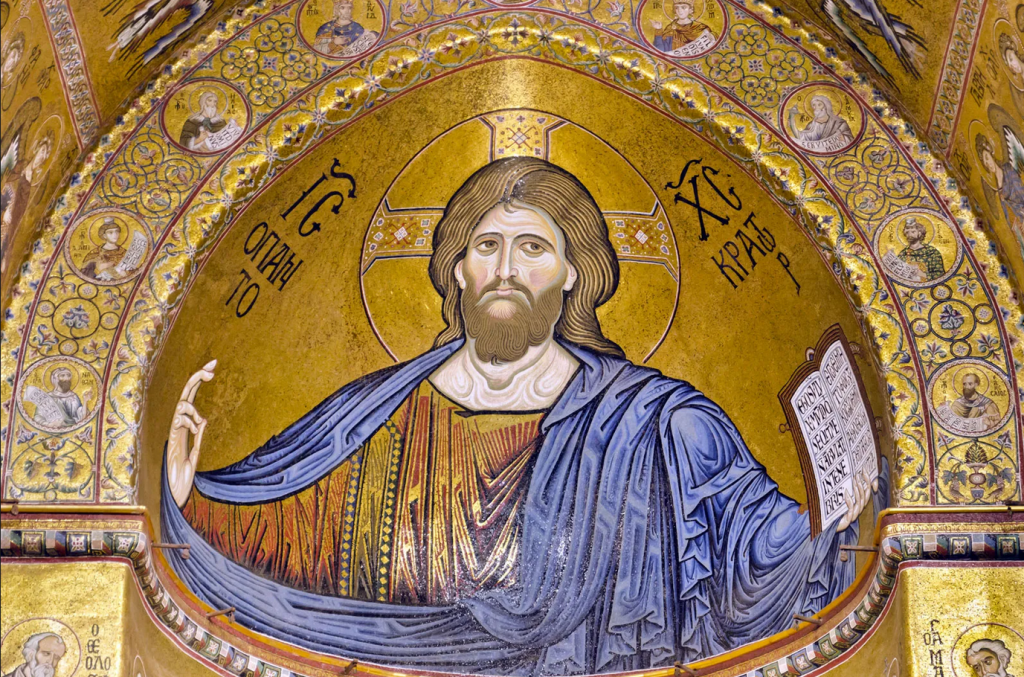
Fourth Lateran Council, AD1215
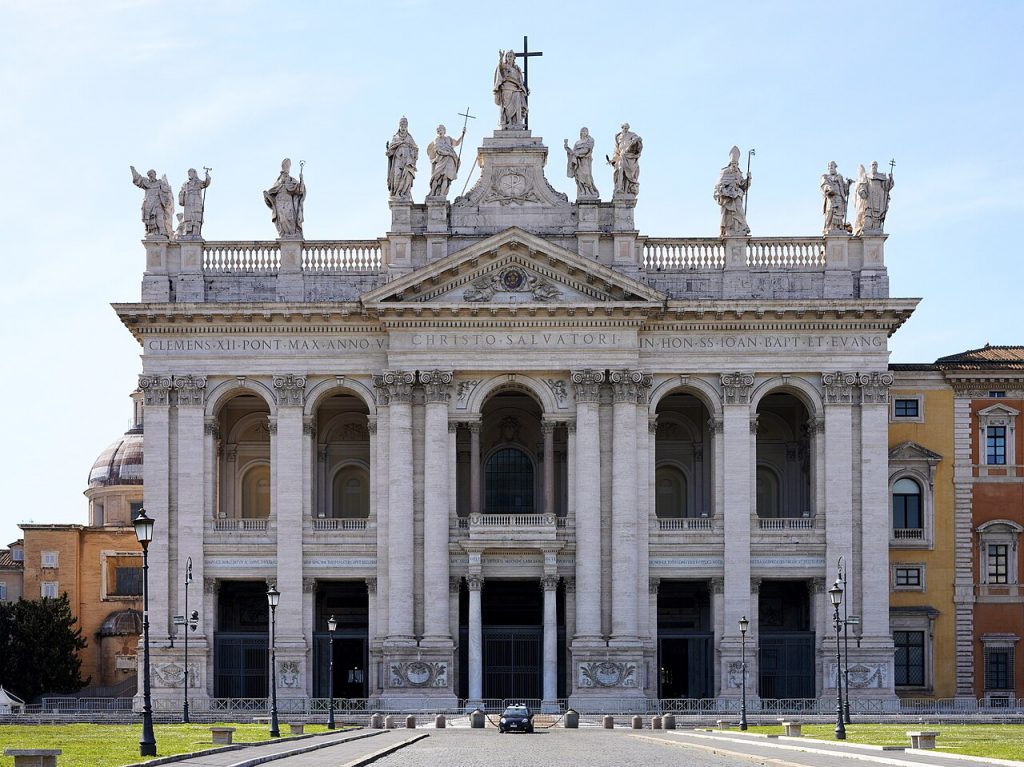
Council of Trent, AD 1545
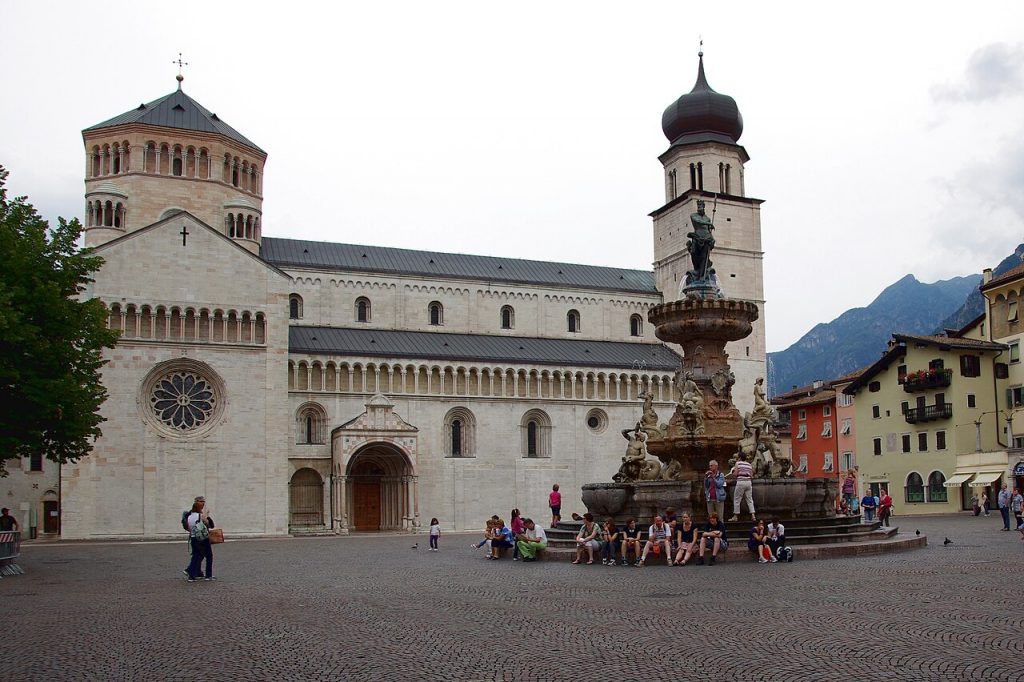
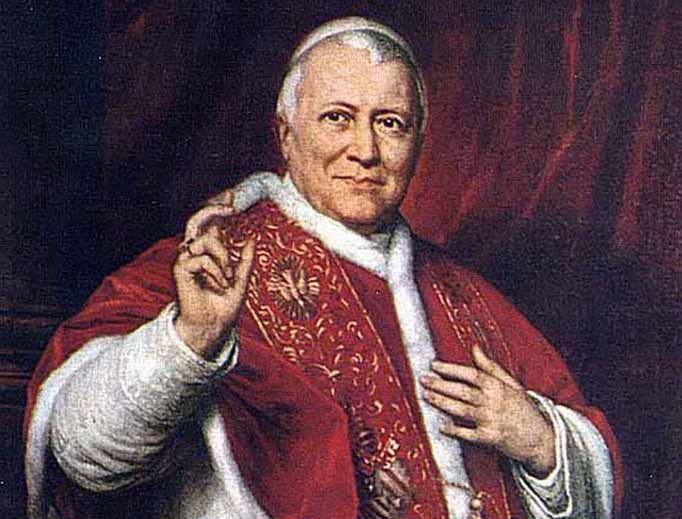
Vatican I , AD 1869
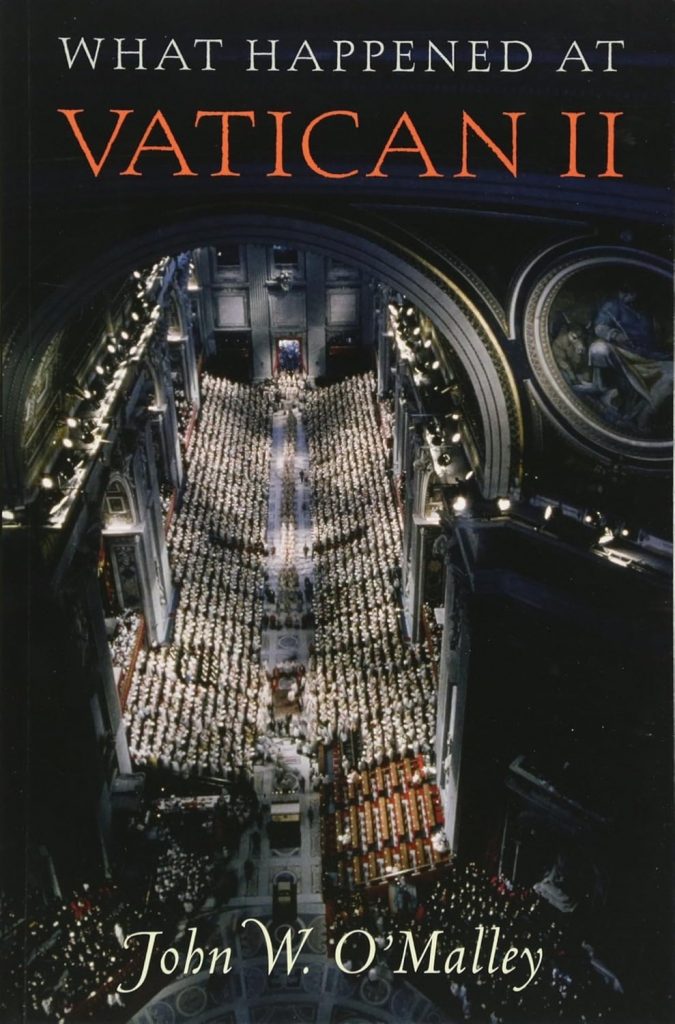
Vatican II, AD 1962
Catholic Religious Orders
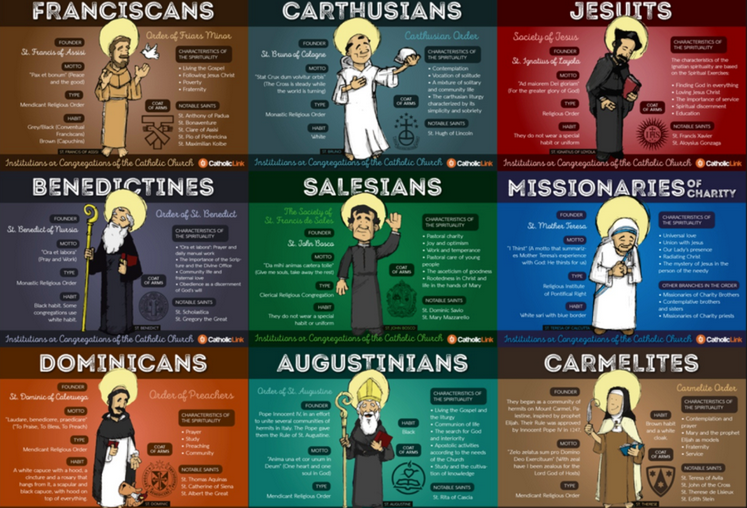
Catholic religious orders are communities within the Roman Catholic Church where men and women dedicate their lives to God through vows of poverty, chastity, and obedience, living in consecrated life according to a specific rule or constitution. These groups, also called institutes of consecrated life, focus on prayer, community living, and various forms of service or apostolate, such as education, healthcare, missionary work, or contemplation, guided by the unique charism (spiritual gift or focus) of their founder. They differ from diocesan clergy, who serve specific local churches, as order members are often more specialized in their missions and may be mobile or cloistered.
History
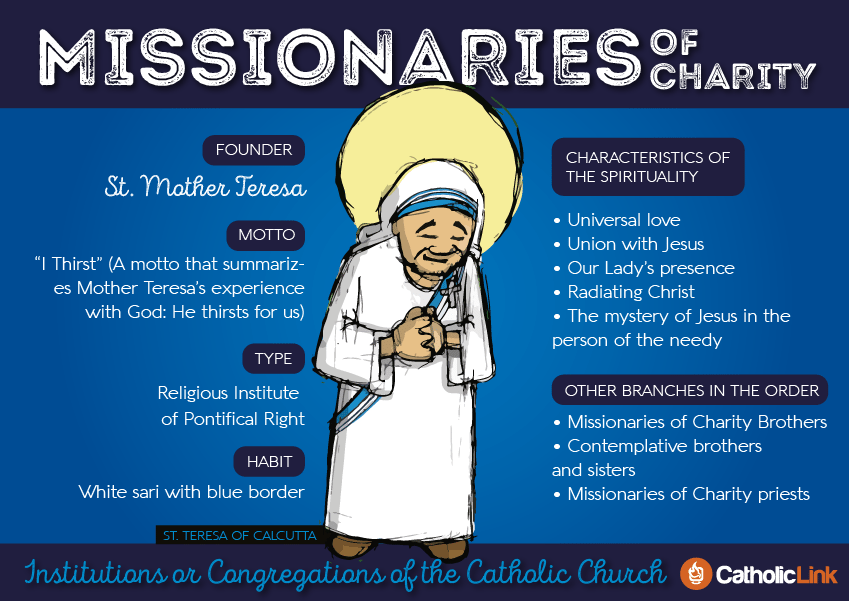
Religious orders trace their roots to early Christian monasticism in the 3rd-4th centuries, inspired by desert hermits seeking solitude and prayer. St. Benedict of Nursia formalized monastic life around 529 AD with his Rule, influencing Western monasticism. In the Middle Ages, mendicant orders emerged to address urban poverty and heresy, emphasizing preaching and begging for alms. The 16th century saw reforms and new congregations amid the Counter-Reformation, like the Jesuits. Modern orders, such as the Missionaries of Charity, focus on contemporary issues like social justice and aid to the marginalized. Over centuries, orders have founded schools, hospitals, and missions, adapting while maintaining vows and charisms.
Types
Catholic religious institutes are broadly categorized by lifestyle and mission, though distinctions can overlap. Key types include:
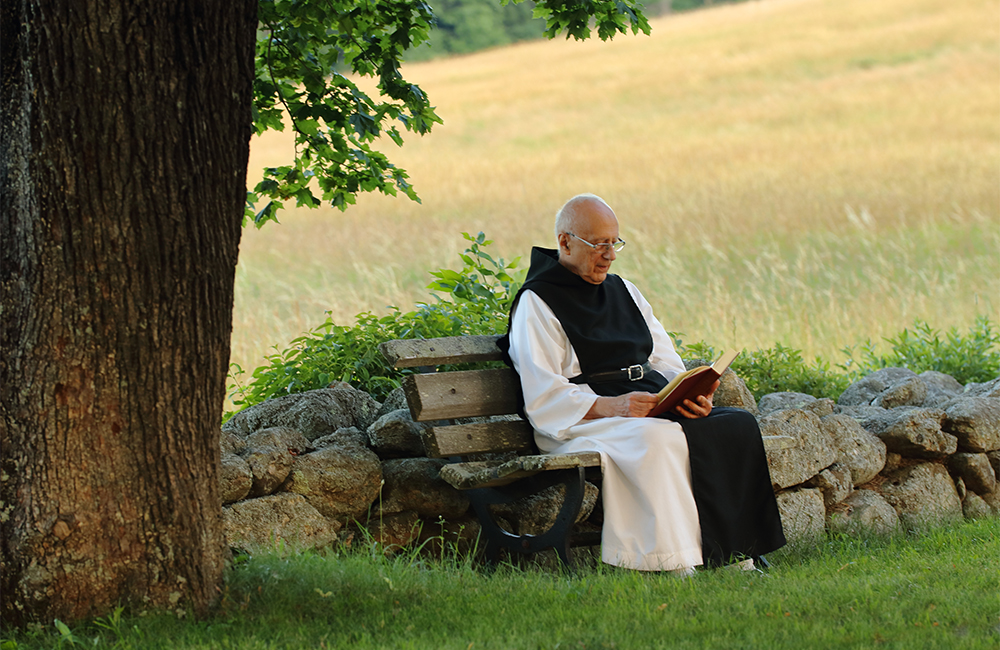
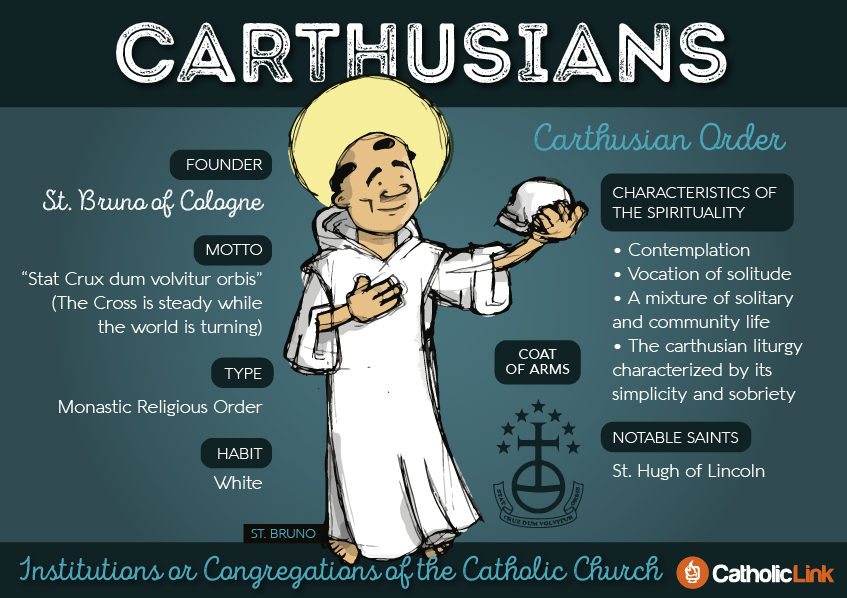
- Monastic Orders: Emphasize contemplative life in monasteries or convents, focusing on prayer (e.g., Divine Office), work, and stability. Members are often cloistered. Examples: Benedictines, Carthusians, Trappists (Cistercians of the Strict Observance).
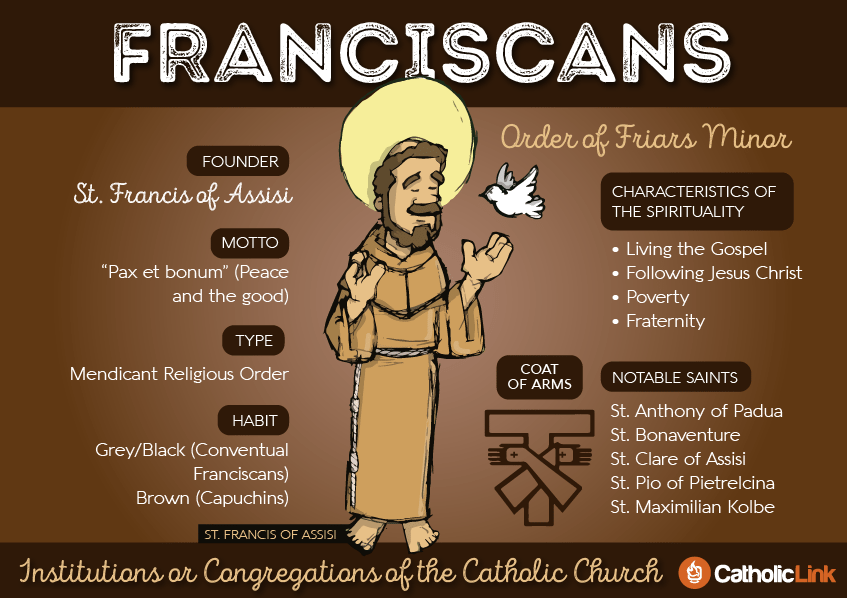
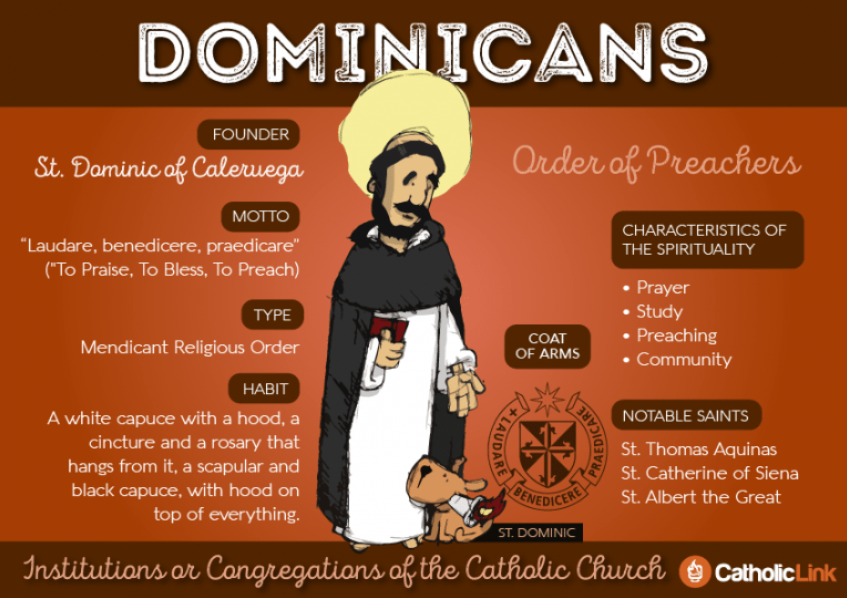
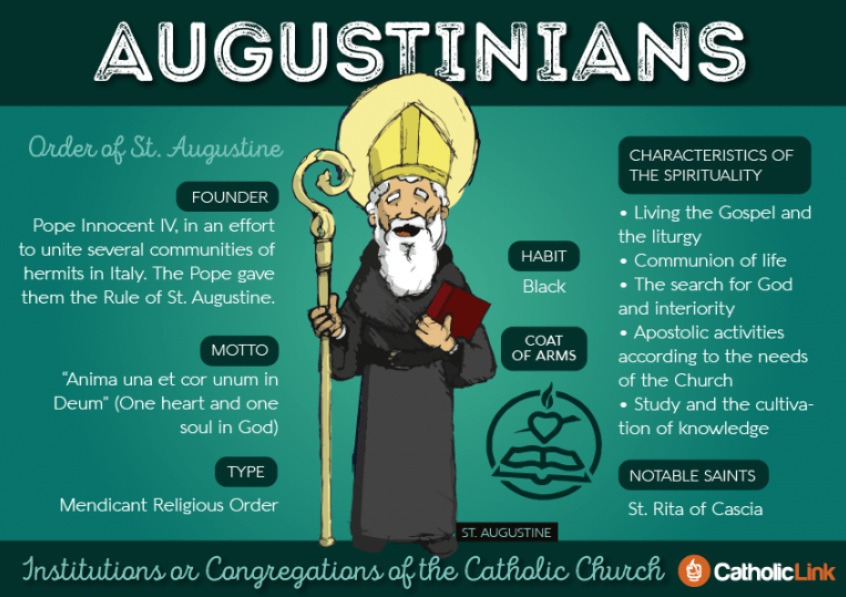
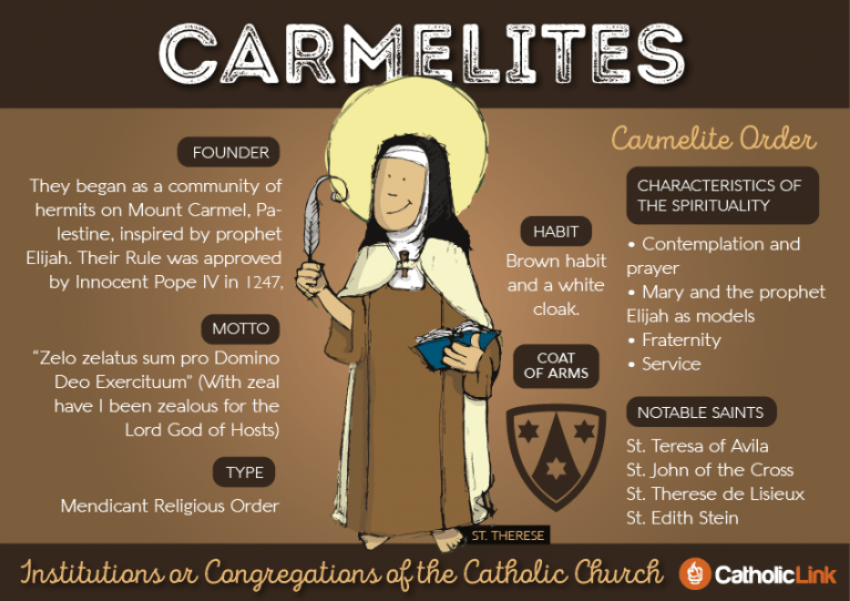
- Mendicant Orders: “Begging” friars or sisters who live in poverty, relying on alms, and engage in active apostolates like preaching, teaching, and service in urban settings. Examples: Franciscans (Order of Friars Minor), Dominicans (Order of Preachers), Carmelites, Augustinians.
- Canons Regular: Priests living in community, serving parishes or churches while reciting the Divine Office. Example: Canons Regular of St. John Cantius.
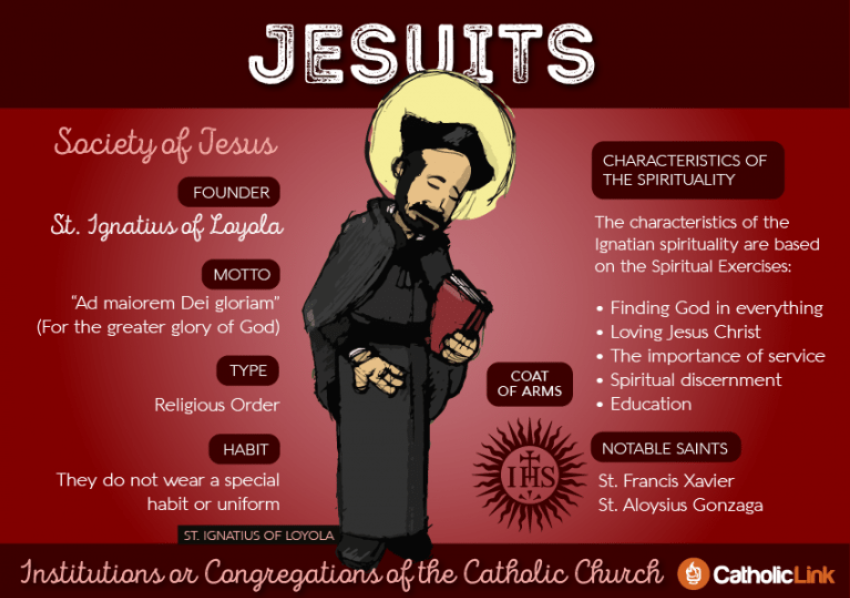
- Clerics Regular: Priests focused on pastoral ministry, education, or missions, living in community without solemn vows (often congregations). Example: Jesuits (Society of Jesus).
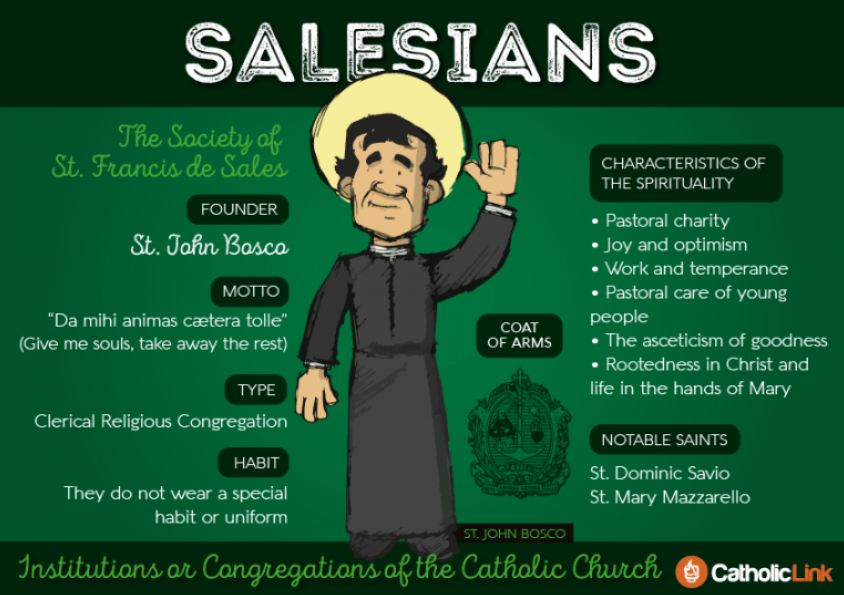
- Apostolic Congregations: Similar to orders but with simple vows; emphasize active service like education or charity. Examples: Salesians of Don Bosco, Missionaries of Charity.
Many orders have branches for men (friars/priests/brothers), women (nuns/sisters), and laity (third orders or secular institutes).
Major Examples
Here are brief overviews of some prominent orders, highlighting their charisms:
- Benedictines (OSB): Founded by St. Benedict (~529 AD); focus on “ora et labora” (prayer and work), hospitality, and stability in monastic communities.
- Franciscans (OFM): Founded by St. Francis of Assisi (1209); emphasize poverty, humility, care for creation, and service to the poor.
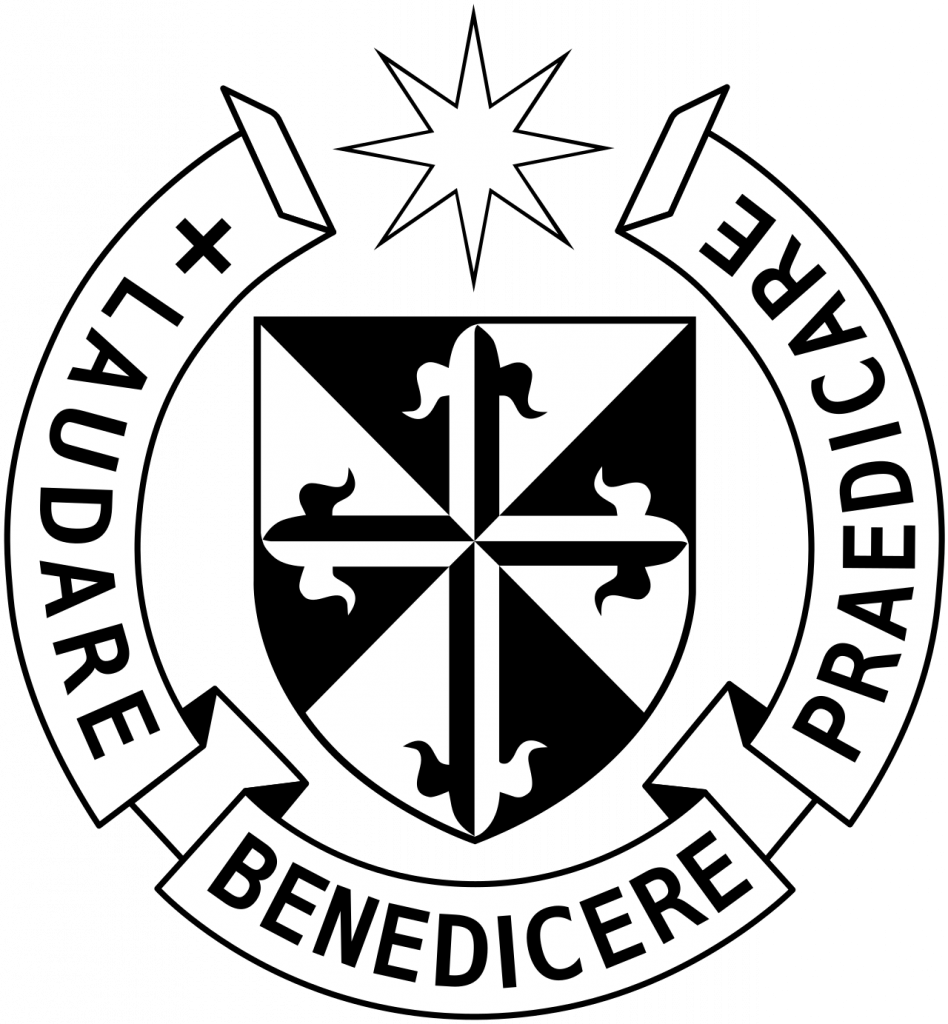
- Dominicans (OP): Founded by St. Dominic (1216); dedicated to preaching, study, and truth-seeking through intellectual apostolates.
- Jesuits (SJ): Founded by St. Ignatius of Loyola (1540); stress education, missions, and “finding God in all things” via spiritual exercises.
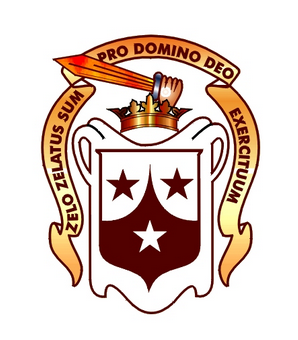
- Carmelites (O.Carm or OCD): Originated ~12th century; prioritize contemplative prayer, solitude, and devotion to Mary.
- Augustinians (OSA): Based on St. Augustine’s Rule (~400 AD); balance community life with active ministry, focusing on charity and interior search for God.
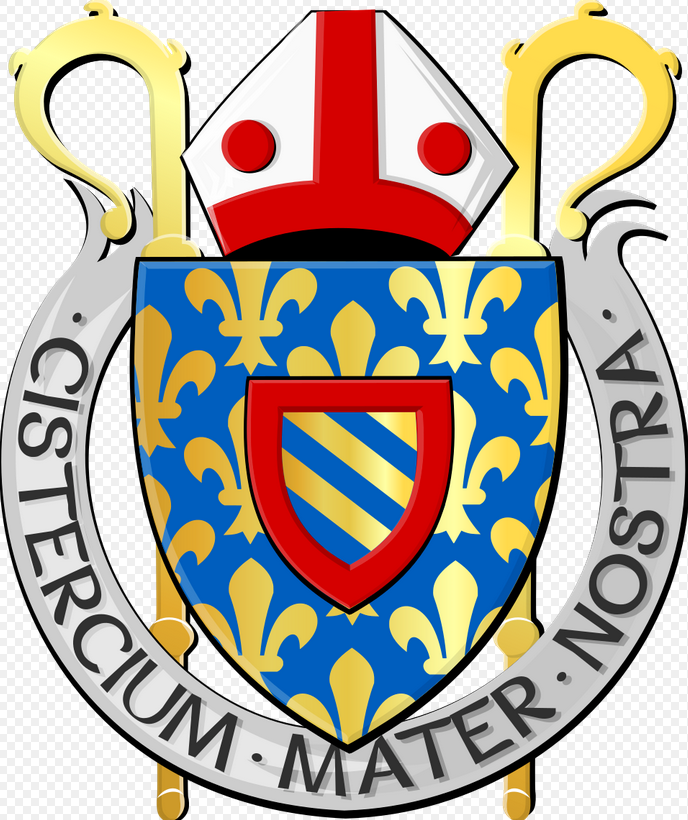
Other notable ones include Cistercians (contemplative reform of Benedictines), Passionists (devotion to Christ’s Passion), and women’s groups like the Poor Clares (Franciscan nuns). Today, thousands of members worldwide continue these traditions, contributing to the Church’s mission.